Reclaiming Local Food Systems Starts With Community-Led Infrastructure
A practical path toward Indigenous food sovereignty through year-round growing systems designed to restore control, strengthen wellness, and support sustainable self-determined food futures.
Across Alberta and Canada, communities are leading a growing movement to restore local food systems, revitalize cultural knowledge, and reduce dependency on supply chains that have never fully served Indigenous peoples. The commitment to reclaiming food sovereignty is powerful, deeply rooted, and rising across Nations. But the path toward self-determined food systems requires more than advocacy—it requires long-term infrastructure that communities own, operate, and benefit from every day.
For many leaders, Elders, youth, and community members, the question isn’t whether Indigenous food sovereignty matters. The question is how to build practical systems that work year-round, support traditional values, withstand northern climates, and strengthen community wellness in a sustainable, scalable way.
This is where community-led growing infrastructure becomes essential. At Willow Brook Farms, we support Nations with Canadian-engineered vertical growing systems designed to help communities reclaim control of their food supply, regardless of climate, distance, or land availability. These systems aren’t replacements for land-based knowledge—they’re tools that help communities grow meaningful food on their own terms, in ways that align with culture, identity, and long-term sovereignty.
Why Indigenous-Led Food Systems Need Infrastructure That Communities Control
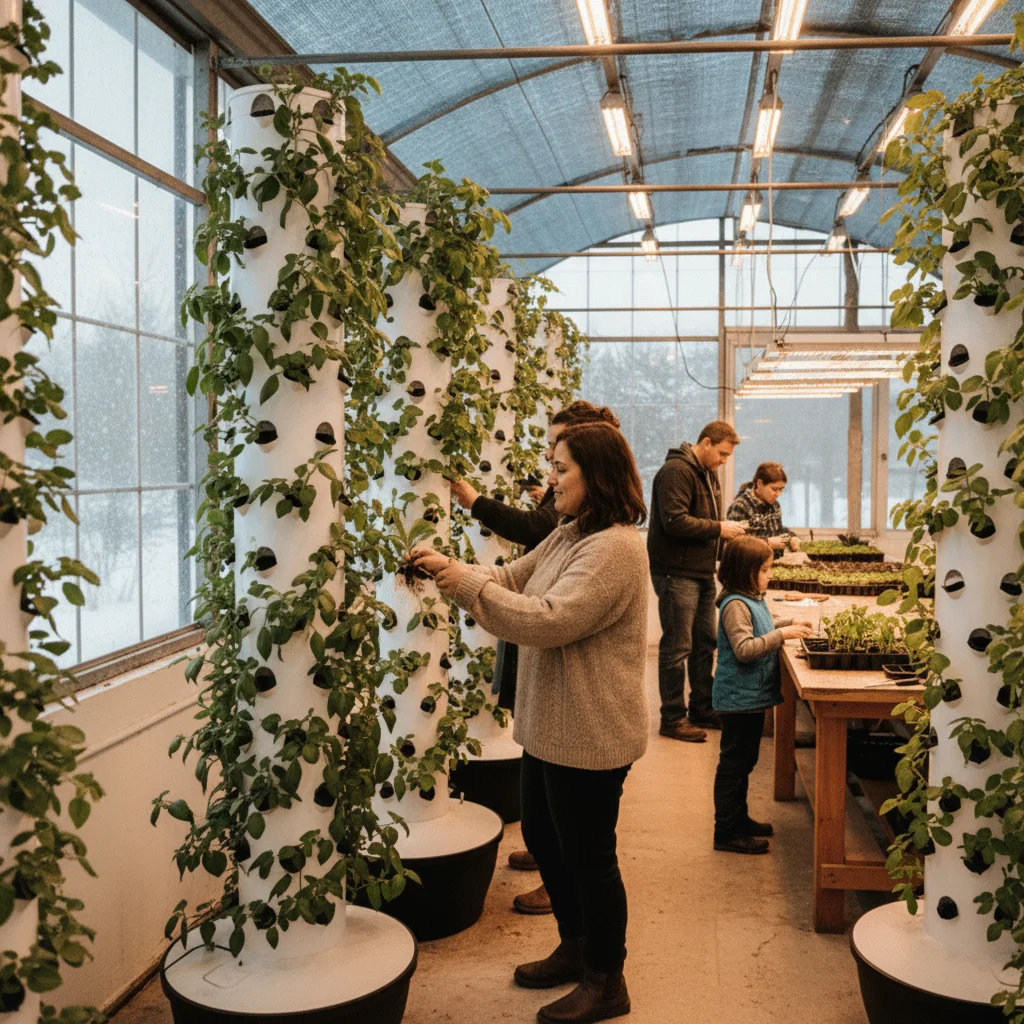
The Indigenous food sovereignty movement continues to gain momentum as Nations across Canada call for restored control over what they grow, harvest, and serve to their people. But rebuilding food systems that were disrupted through colonization requires practical, reliable, year-round tools that work in northern and remote regions.
Many communities share similar challenges:
- short growing seasons
- difficulty accessing arable land
- high food costs
- limited access to fresh produce
- reliance on long, unpredictable supply chains
- infrastructure funding that stops at pilot projects
- the desire for culturally aligned solutions, not imported models
Vertical growing systems offer a way forward—supporting self-determination through consistent, community-controlled food production that strengthens both wellness and cultural continuity.
Community-Led Growing Systems Designed for Indigenous Food Sovereignty
Our work is grounded in partnership with Indigenous Governments, councils, Elders, and youth. Everything we build begins with a simple principle: the tools we provide must advance sovereignty, not dependency.
We offer three scalable vertical tower systems—Home, Commercial, and Farming—each designed to support a different stage of food independence.
Together, they create a foundation communities can expand over time, forming micro farms, school food programs, community hubs, and wellness initiatives.
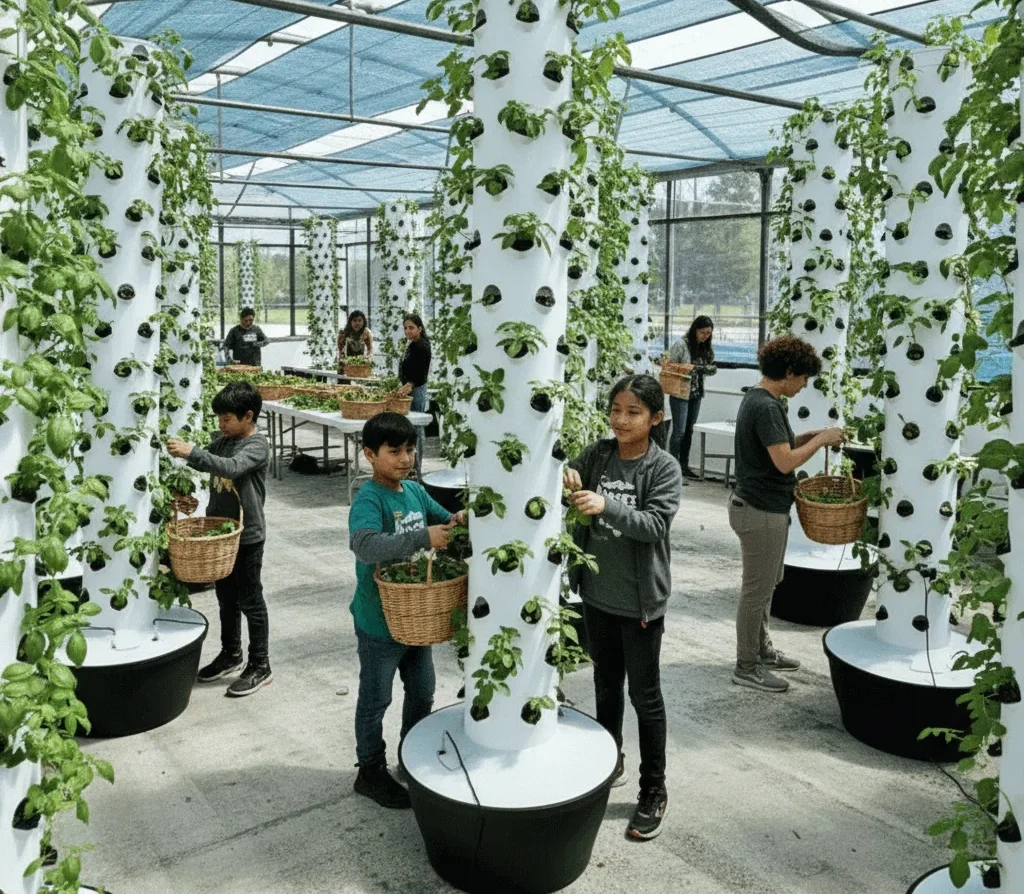
These systems grow up, not out, making them ideal for remote regions, compact indoor environments, and communities facing limited access to land.
Home Tower – Supporting Households, Elders, and Youth
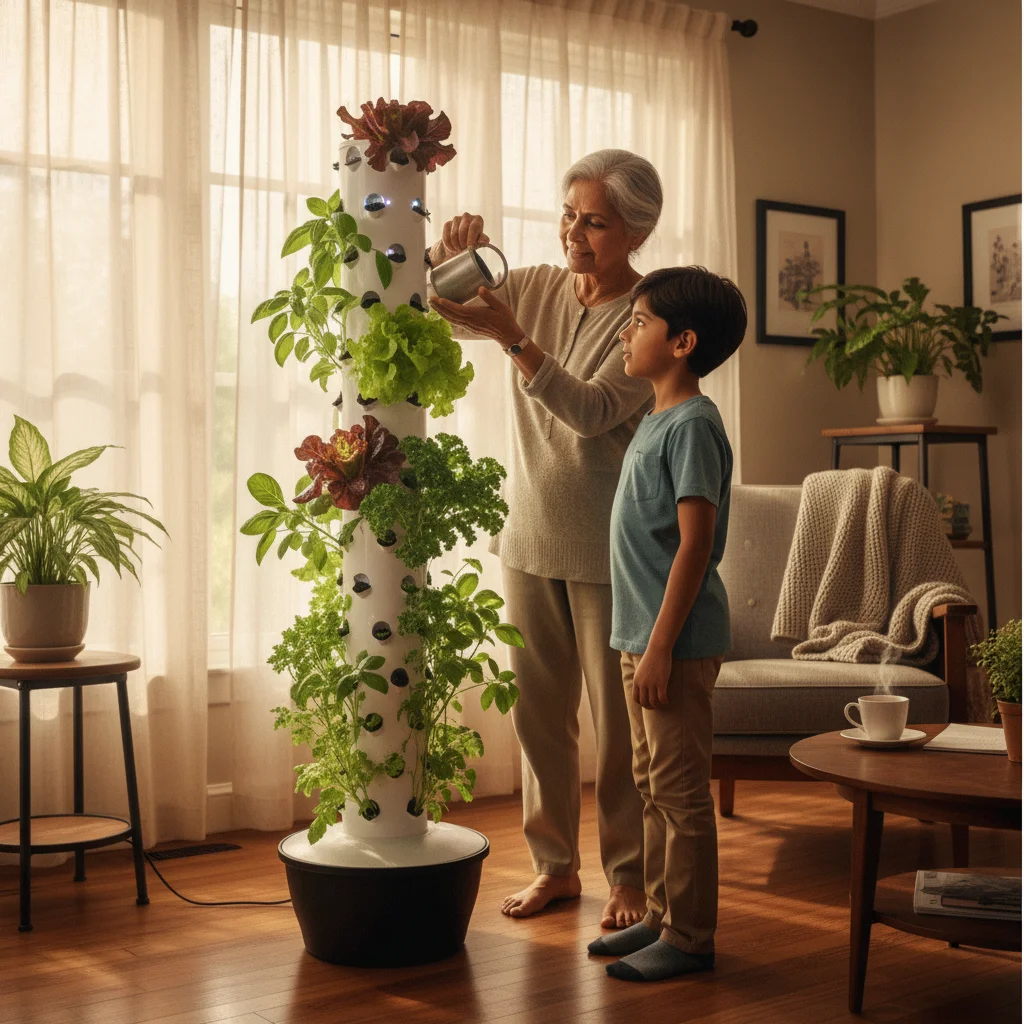
For households and smaller spaces, the Home Tower provides a year-round source of fresh greens, herbs, and vegetables. It fits comfortably into homes, Elder care programs, family wellness initiatives, and youth centers.
Communities use Home Towers to:
- increase access to fresh produce for Elders
- provide families with locally grown food
- introduce children and youth to growing skills
- support home-based nutrition programs
- expand the everyday practice of growing food at home
This tower is often the first step toward building stronger, community-led food systems.
Commercial Tower – Strengthening Schools, Community Programs, and Food Initiatives
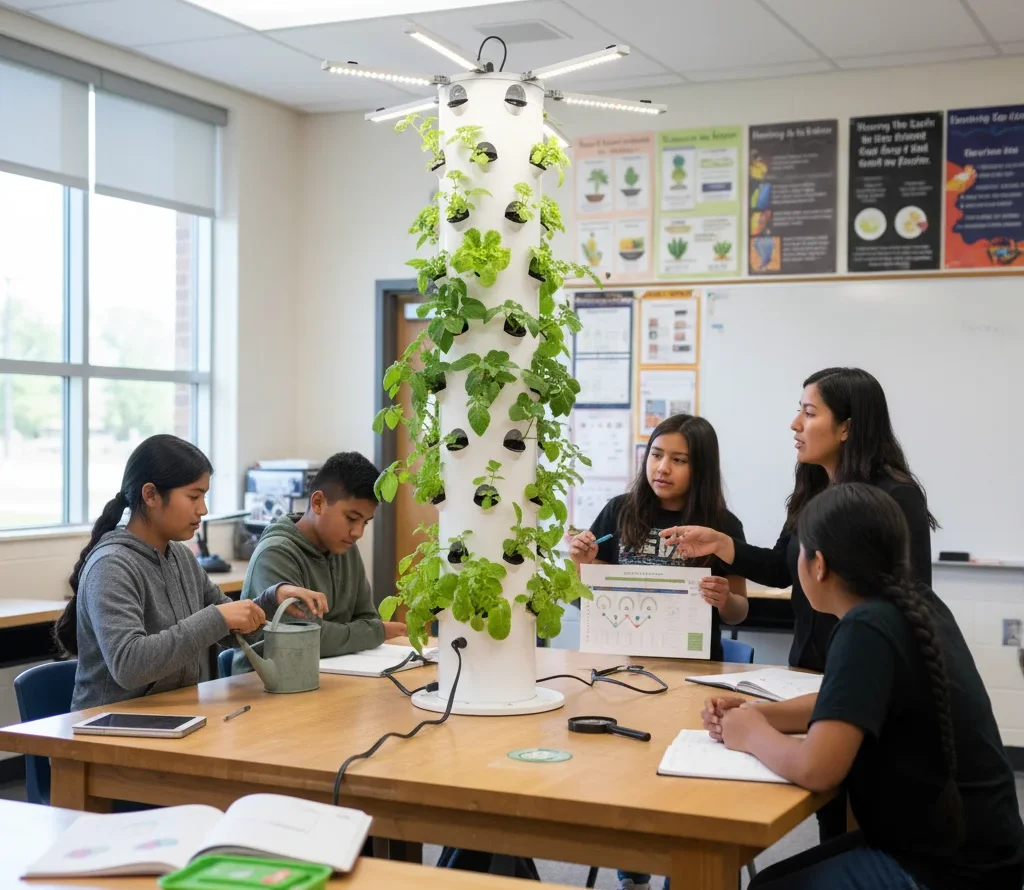
The Commercial Tower supports classrooms, school nutrition programs, and community food initiatives that require larger capacity without large facility demands.
With an 8-layer, 64-plant capacity, it becomes a living learning tool for:
- school curriculum tied to culture, science, and land-based learning
- community feasts and food programs
- youth leadership and skill development
- school-based micro farms or cafeterias
- nutrition education and local food advocacy
This tower brings the Indigenous food sovereignty movement directly into educational spaces, connecting youth to food systems in ways that build pride and confidence.
Farming Tower – Scalable Infrastructure for Community Food Independence
For community-level food initiatives, the Farming Tower offers the highest yield, supporting micro farms, wellness centers, community greenhouses, and long-term food security strategies.
Communities use Farming Towers to:
supply fresh foods to community kitchens and health programs
fill food boxes and local food distribution systems
support diabetes prevention and nutrition initiatives
build multi-tower micro farms owned and operated by the Nation
generate consistent production regardless of weather or distance
When combined into clusters, Farming Towers become the backbone of community-led food infrastructure—scalable, reliable, and fully controlled by the Nation.
Designed for Northern Climates, Remote Communities, and Year-Round Growing
One of the biggest barriers to Indigenous food sovereignty is climate. Short summers and long winters make soil-based growing challenging, especially in northern regions.
Vertical growing systems address this directly:
- They grow indoors, unaffected by winter conditions.
- They require no reliance on soil quality.
- They deliver consistent yields regardless of season.
- They reduce dependence on costly food shipments.
- They allow communities to produce fresh food even during harsh weather.
This reliability is critical for communities building long-term, self-determined food systems.
Supporting Community Wellness Through Local, Nutrient-Dense Food
Access to nutritious food is central to community wellness. Many Nations continue to face disproportionately high rates of food insecurity, and the impacts are felt across all age groups.
Vertical growing systems help communities:
- increase access to fresh, nutrient-dense foods
- support chronic disease prevention programs
- improve school lunches and youth nutrition
- bring healthy foods directly into community kitchens
- reduce dependency on processed, shelf-stable foods
- create daily access to fresh greens, herbs, and vegetables
While vertical systems are not a replacement for traditional harvesting or land-based practices, they support health in a practical, immediate way—strengthening the foundation from which long-term sovereignty grows.
A Scalable Solution That Grows With the Community
Many communities begin with a pilot project or a small cluster of towers before expanding into full micro farms and community-led growing hubs. Because each system is modular, communities can scale at their own pace in alignment with funding cycles, training capacity, and long-term goals.
Our towers are built to help communities grow at a pace that feels manageable, sustainable, and culturally aligned—not rushed or imposed.
Whether a Nation chooses to install a single tower in a school or build a multi-tower micro farm in a community facility, each step contributes to long-term sovereignty.
A Métis-Owned Business Rooted in Community Values
Willow Brook Farms is a Métis-owned organization built around the belief that sovereignty begins with control—control over food, knowledge, wellness, and community futures.
Our approach is grounded in:
- partnership, not prescription
- culturally respectful support
- long-term relationships with Nations
- solutions that align with the values of Indigenous communities
- infrastructure that strengthens both wellness and identity
- systems that promote autonomy, not dependency
We support communities not just with equipment, but with guidance, training, and long-term partnership.
Why Communities Across Canada Choose Willow Brook Farms
Working with Indigenous Governments and leadership means understanding the broader purpose behind each decision. Sovereignty is not a project—it’s a long-term commitment to future generations.
Communities choose Willow Brook Farms because:
We are built for sovereignty.
Our systems are designed to help Nations reclaim control of their food supply and reduce dependency on external sources.We are Canadian-owned and engineered.
Our towers are made for northern climates and remote regions.We support every stage of the journey.
From first-time growers to full-scale food infrastructure, we provide systems and guidance that grow with the community.We are culturally aligned.
Our work respects traditional knowledge and supports its continuation, not replacement.We prioritize long-term impact.
Our goal is to build sustainable systems the community owns, manages, and benefits from indefinitely.
Building Self-Determined Food Futures
The movement toward Indigenous food sovereignty is powerful because it is self-defined, community-led, and grounded in both tradition and innovation. Vertical growing systems are one part of this movement—practical, reliable tools that support the broader vision of land connection, wellness, and community strength.
Food sovereignty grows through many actions:
restoring culture and knowledge
strengthening land stewardship
building local food systems
investing in community-owned infrastructure
empowering youth to become growers and leaders
ensuring every household has access to fresh food
When communities have the tools they need to grow food locally, sovereignty becomes more than a goal—it becomes a lived reality.
Grow sovereignty, not just salad.
If your community is exploring pathways toward Indigenous food sovereignty, we are here to support your next steps. Our team works alongside leadership, Elders, and program coordinators to design systems that align with your community’s goals and capacity.