The Lights On Movement A Movement For Truth & Reconciliation September 30 – October 31 2025
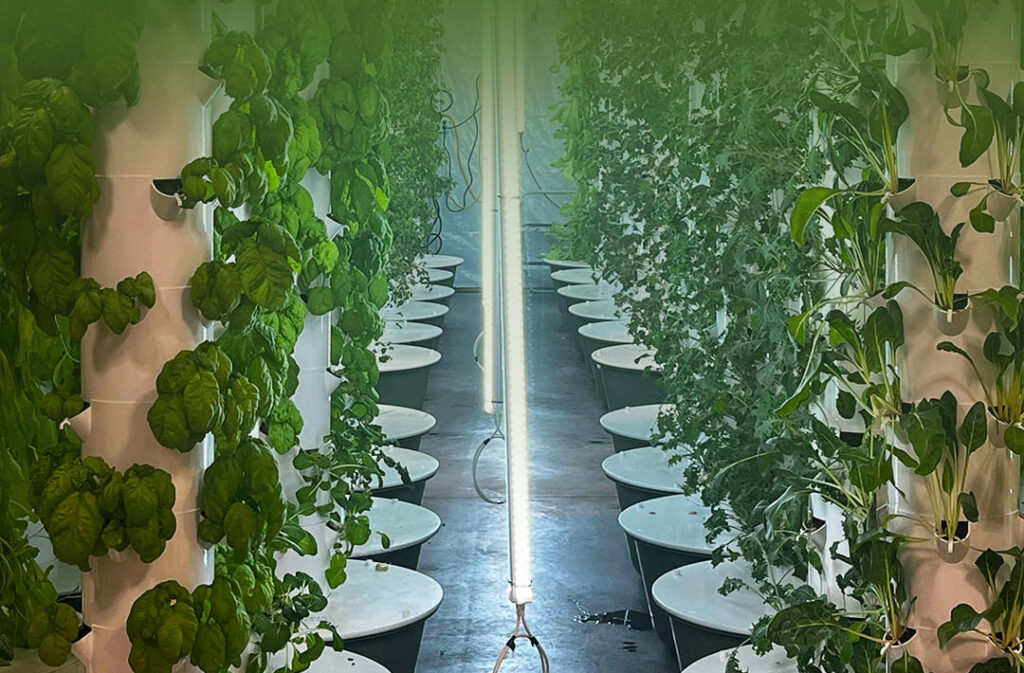
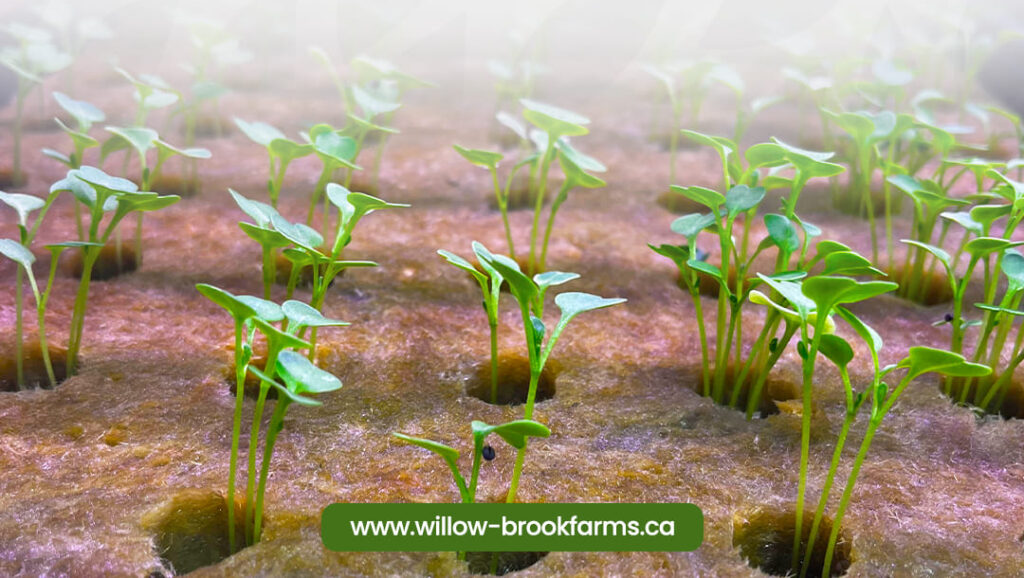
Teaching students about sustainability has become an essential part of modern education. Across Alberta and Canada, schools are being asked to prepare young people for a future where climate literacy, food systems knowledge, and environmental responsibility are no longer optional—they are foundational. Yet for many educators, the challenge is clear: teaching sustainable agriculture is difficult without the right tools.
Not every school has access to land. Not every classroom has the capacity for outdoor gardens. And even when the desire is there, many sustainable agriculture programs require space, resources, or experience that teachers simply do not have. This gap leaves a growing number of educators searching for practical, hands-on solutions that bring sustainable agriculture into the learning environment in a way that is meaningful, manageable, and built for long-term success.
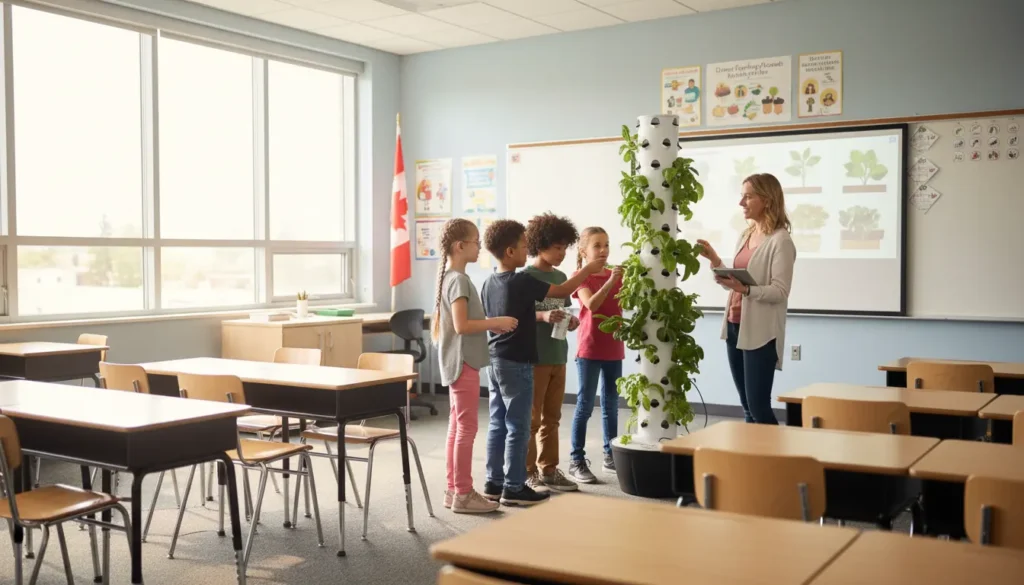
At Willow Brook Farms, we support schools across Canada by providing vertical growing systems that turn any classroom into a living agriculture lab. These systems allow teachers to deliver hands-on learning without requiring additional land, complex infrastructure, or prior farming experience. Our approach makes sustainable agriculture accessible, engaging, and aligned with curriculum outcomes—helping educators integrate real-world growing into their lessons year-round.
The interest in teaching sustainable agriculture programs has grown significantly over the past decade. From K–12 classrooms to district-wide sustainability initiatives, Canadian educators are looking for ways to make environmental learning more experiential. However, the tools needed to support these programs are often missing, leaving teachers with strong intentions but few realistic options.
Traditional teaching methods—textbooks, videos, lectures—can introduce concepts but cannot replace the value of hands-on experience. Students learn best when they can observe, experiment, tend, and grow. But implementing an agriculture program requires much more than enthusiasm. Schools face barriers such as limited space, short growing seasons, funding constraints, and the challenge of maintaining gardens in environments that were never designed for food production.
Vertical growing systems address these challenges directly. They bring the experience of agriculture into the classroom without relying on weather, soil, or outdoor space. More importantly, they invite students into the process, giving them the chance to witness plant cycles, understand food systems, and connect sustainability principles to real-world outcomes.
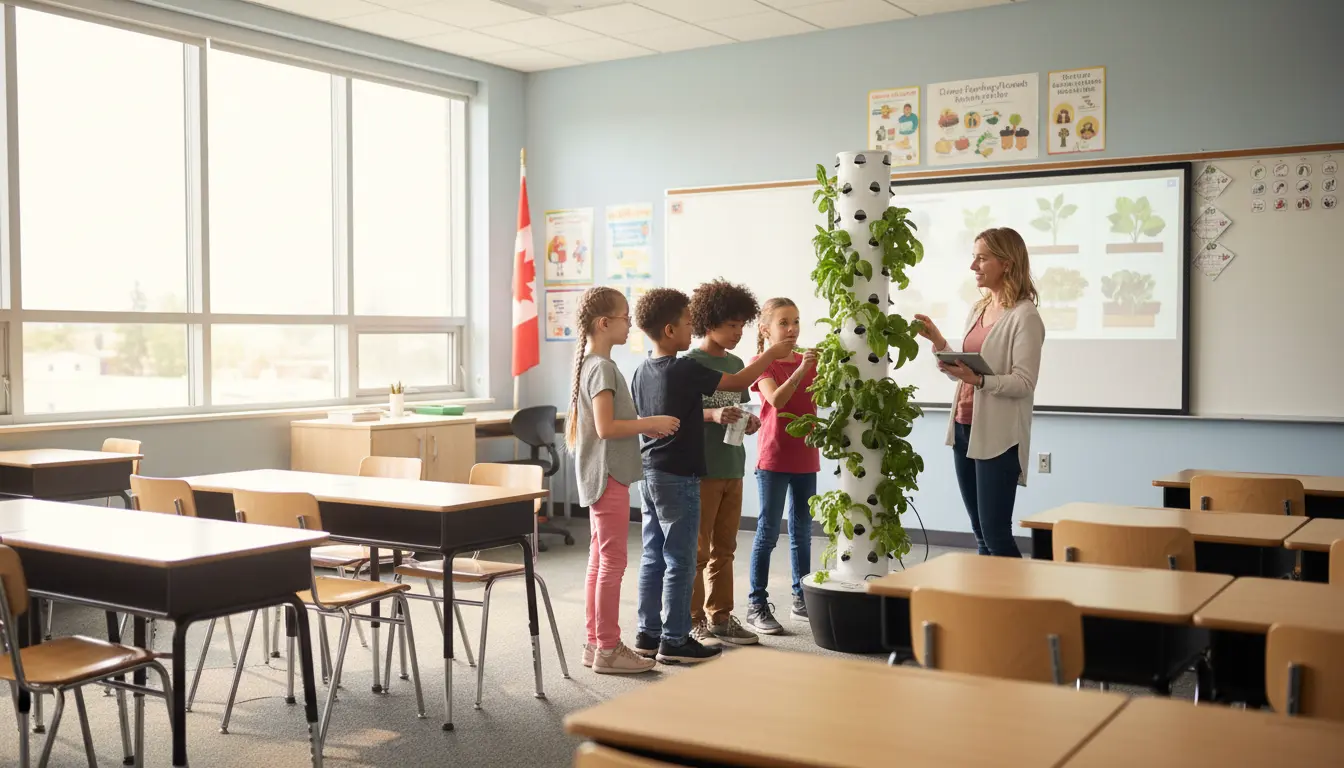
Our vertical growing towers are engineered to support teachers in delivering sustainable agriculture learning in a way that is practical and effective. Designed in Canada and built for year-round use, each system operates in a small footprint, requires minimal maintenance, and produces consistent results regardless of the season. This makes them ideal for schools across Alberta and the rest of Canada, where outdoor growing seasons can be short and unpredictable.
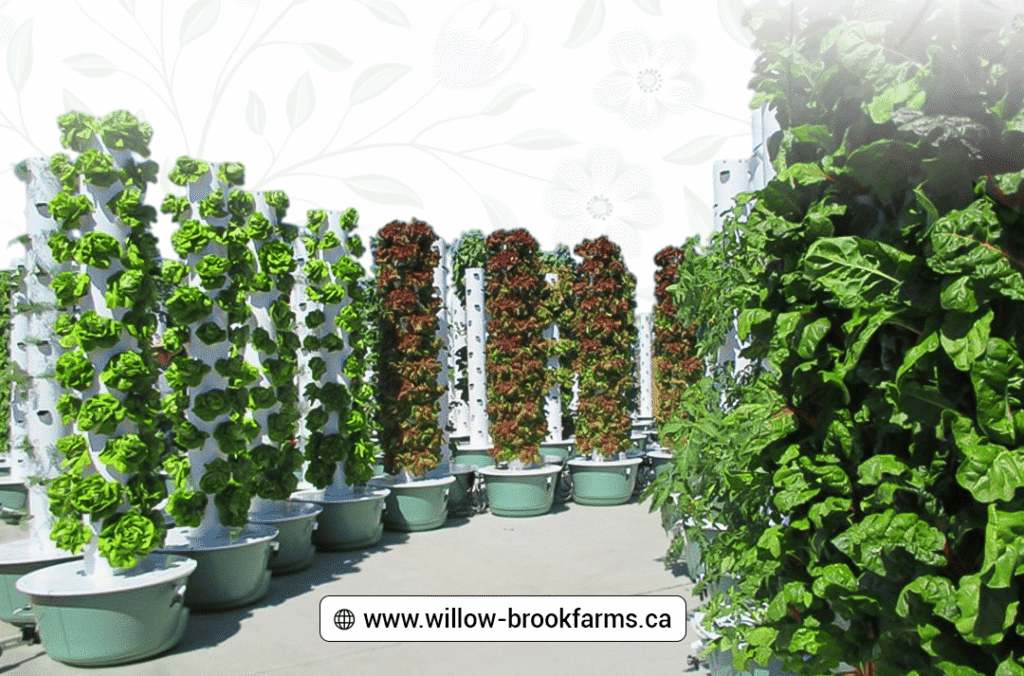
The design is intentionally simple. Each tower uses aeroponic technology to grow leafy greens and herbs without soil, allowing for clean, indoor operation. Water and nutrients circulate through the system, offering students a clear demonstration of how sustainable growing works in controlled environments. The systems are quiet, efficient, and safe for classrooms, making them ideal for learning spaces, libraries, labs, and multi-use rooms.
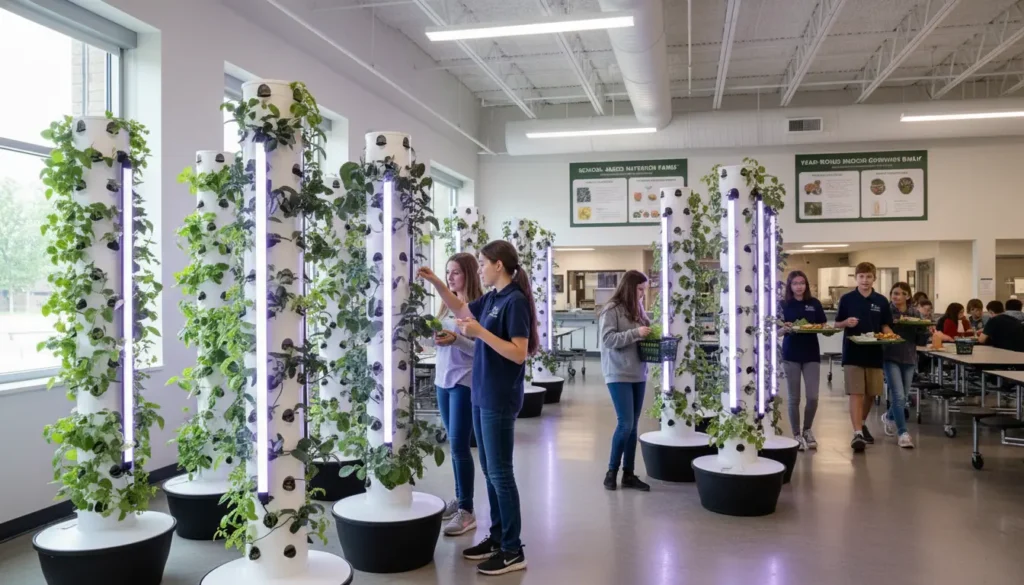
Because the towers are modular, schools can start with a single unit and expand over time. Some classrooms run one tower for demonstration, while others build full micro farms that support cafeteria programs, food security initiatives, or school-wide sustainability goals.
The Home Tower is the most accessible model, designed for small classrooms or introductory programs. Its compact footprint fits easily in classrooms or small learning spaces. Students can observe plant growth, conduct experiments, and learn about sustainability without requiring outdoor space or extensive setup.
Teachers often use this model to introduce younger students to plant biology, nutrition, and environmental stewardship. Because the tower grows quickly and consistently, students experience the full cycle of cultivation, harvest, and consumption within a school term.
The Commercial Tower supports larger-scale educational programs, school cafeterias, and project-based learning initiatives. With a higher plant capacity, this model allows students to explore the relationships between food production, sustainability, and community health.
Educators often use the Commercial Tower to support cross-disciplinary projects that combine science, environmental education, and food systems learning. It becomes a living learning tool that teachers can incorporate into lessons throughout the year.
For schools committed to comprehensive sustainability programming, the Farming Tower offers the highest capacity and the greatest range of learning opportunities. This model supports school cafeterias, community food hubs, wellness programs, and advanced agriculture education initiatives.
When paired with multiple towers or additional classroom systems, the Farming Tower forms the backbone of a school-wide agriculture program that prepares students for long-term environmental responsibility. Many schools use this system to create indoor micro farms that operate year-round, giving students consistent access to fresh produce and ongoing opportunities for experiential learning.
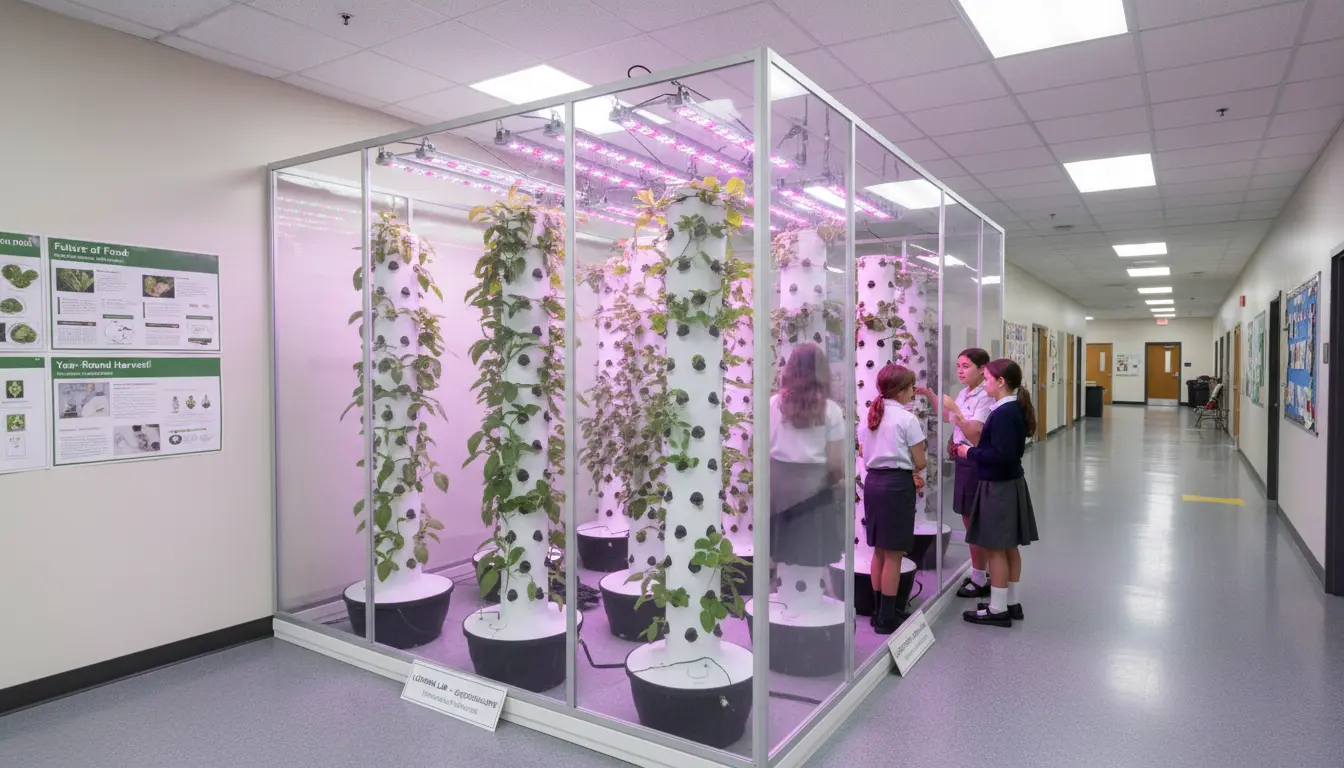
One of the biggest challenges educators face is limited space. Many schools do not have access to gardens, greenhouses, or outdoor land, and even when outdoor space exists, weather conditions in Alberta and across Canada can make year-round programming nearly impossible.
Vertical growing systems solve this issue by transforming indoor spaces into agriculture labs. Classrooms, libraries, multipurpose rooms, and even hallways become opportunities for growing. Students can observe the systems up close, care for plants, and participate in the full growing cycle without needing a traditional garden.
This accessibility is a key reason teachers turn to vertical systems. It allows them to integrate sustainability into their lesson plans no matter the season or location. It makes teaching agriculture practical rather than aspirational. And it ensures that students receive a consistent learning experience throughout the school year.
Teaching sustainable agriculture is not a single-subject initiative. It touches science, nutrition, stewardship, technology, health, climate literacy, and community responsibility. This makes vertical growing systems extremely valuable in the classroom, as they can support learning outcomes across grade levels and disciplines.
In early education, towers introduce students to plant biology and environmental awareness. In middle grades, they support projects related to ecosystems, resource management, and food systems. In high school, they become tools for deeper academic exploration, including sustainability research, controlled environment agriculture, STEM projects, and community impact initiatives.
Because they integrate so naturally into curriculum outcomes, teachers can use vertical growing systems to strengthen existing lessons or create entirely new ones. The systems don’t replace the curriculum—they enhance it.
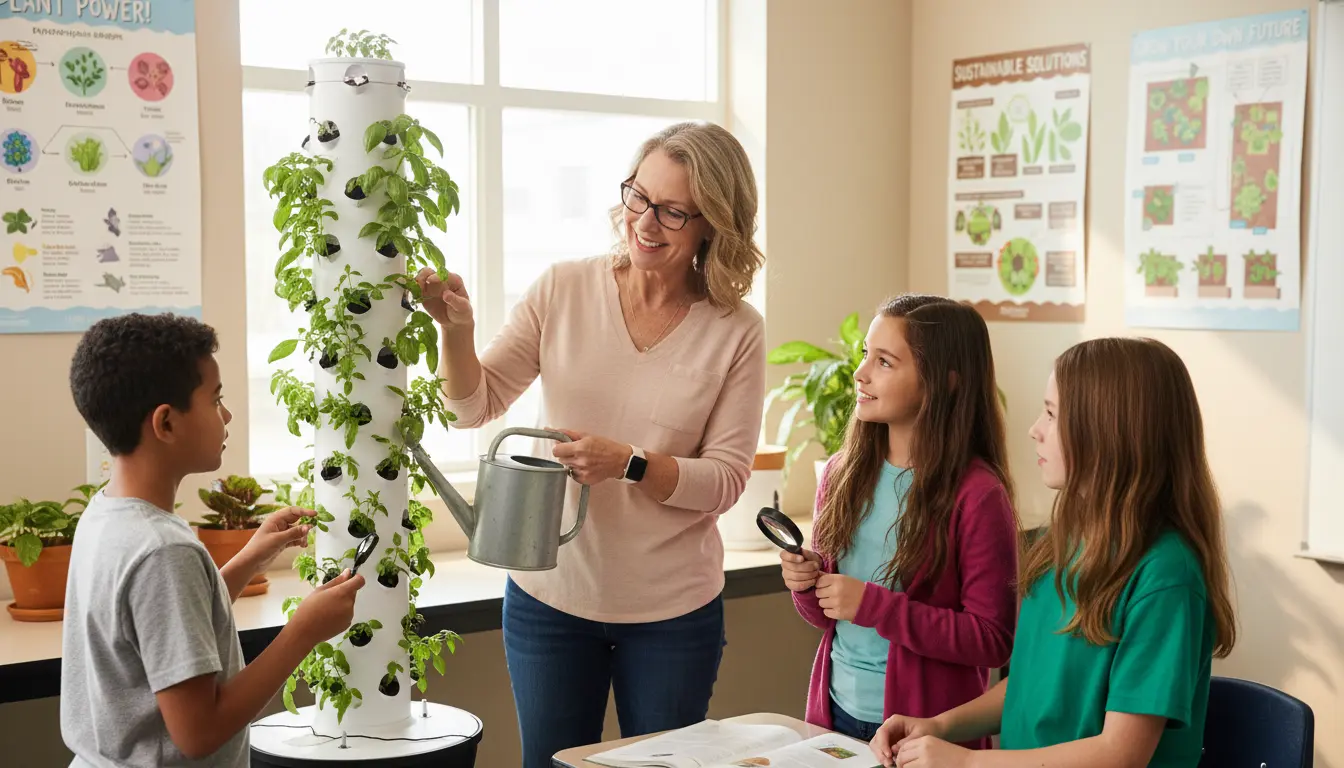
Hands-on learning consistently produces higher engagement and stronger learning outcomes. When students have the opportunity to observe, care for, and harvest plants, they develop a deeper understanding of the relationship between food systems, sustainability, and their own choices.
Vertical growing systems create a tangible, meaningful learning experience. Students see immediate results, track real-time growth, and develop an understanding of what sustainable agriculture looks like in practice. This builds curiosity, responsibility, and confidence—qualities that support learning far beyond the classroom.
Educators appreciate that towers make experiential learning accessible without requiring extensive preparation or constant maintenance. The systems are designed to be easy to manage, even for teachers with limited time or no previous agriculture experience.
School programs often begin with enthusiasm but lose momentum when resources become stretched. Vertical growing systems are built to support long-term scalability, allowing educators to expand their programs gradually and sustainably.
Many schools start with a single tower and later add additional units to support school gardens, cafeteria programs, or elective courses. Because the systems are modular, they adapt to the school’s evolving needs without requiring major upgrades or renovations.
This scalability makes vertical growing an effective tool for building long-term sustainable agriculture programs that continue year after year.
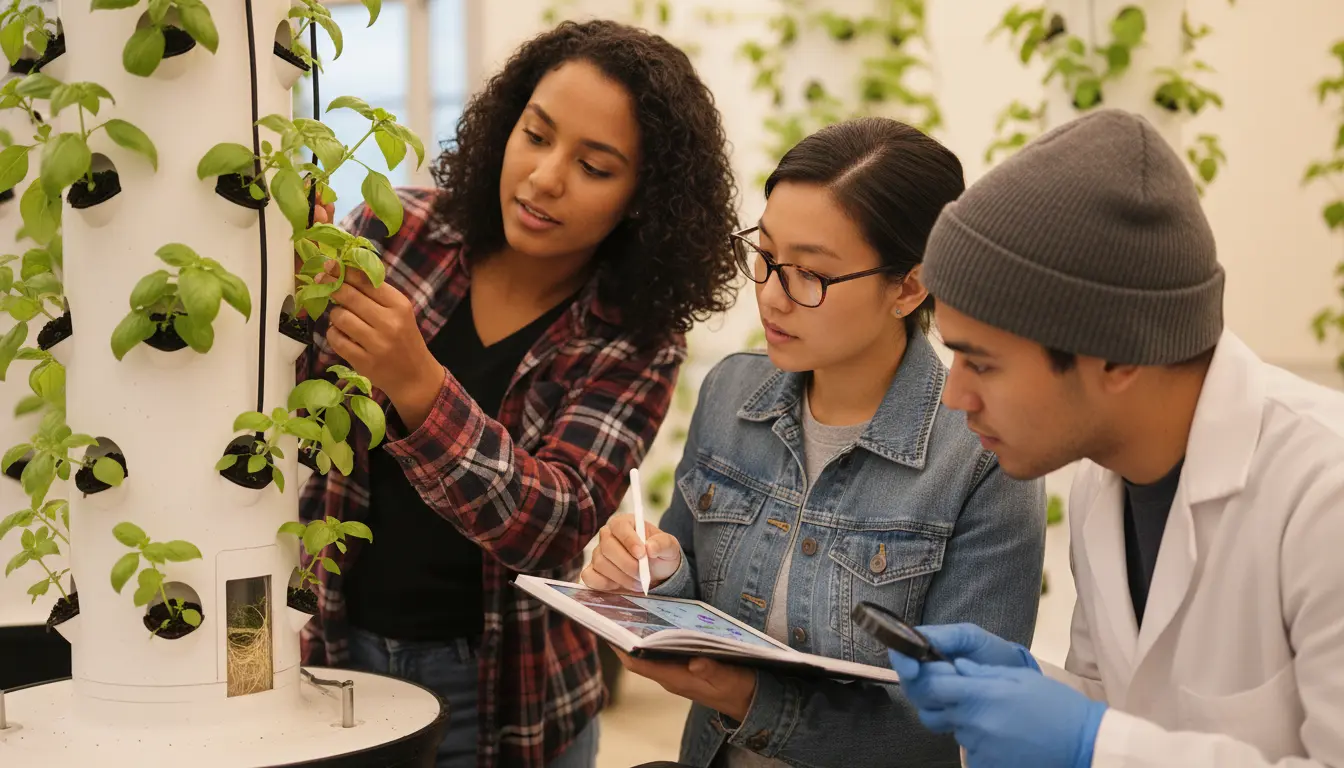
At Willow Brook Farms, our mission is to make sustainable agriculture accessible to learners across Canada. We support schools by providing solutions that are reliable, easy to use, and aligned with the needs of modern educators.
Our vertical growing systems are Canadian-engineered, built for year-round use, and designed to help teachers bring sustainability to life in their classrooms. We understand the challenges educators face and work alongside schools to ensure that their programs are supported, successful, and impactful.
We believe that the next generation deserves a strong foundation in sustainability—one rooted in experience, not just theory. Our towers make that possible.
When students learn to grow food, they learn responsibility. When they understand resource cycles, they learn stewardship. When they see firsthand how sustainable agriculture works, they begin to understand the impact of their choices on the world around them.
Classrooms equipped with vertical growing systems become spaces where students can explore, experiment, and imagine a future where sustainability is the norm. These experiences help shape informed, engaged young people who understand their role in building a more resilient world.
Teaching sustainable agriculture is not only about food—it’s about preparing students for a future in which environmental literacy is essential.
If your school is ready to bring sustainable agriculture into the classroom, our team is here to help you get started. We provide guidance, equipment, and support to ensure your program is successful from day one.
Sturgeon County, Alberta, Canada
info@willow-brookfarms.ca